All projects
Themes
Regenerative Cities and Regions
Local & Regional Practices
Participation & Community
Duration
2025 – Present
Location
Germany and USA
Transatlantic Frontrunners

Purpose
As part of the Transatlantic Programme from the German Federal Ministry for Economic Affairs and Energy (BMWE), Bauhaus Earth has initiated a two-year project to promote knowledge building and exchange between Germany and US cities in the field of the regenerative built environment.
Cities in transition: A transatlantic exchange on decarbonisation and regenerative urban development
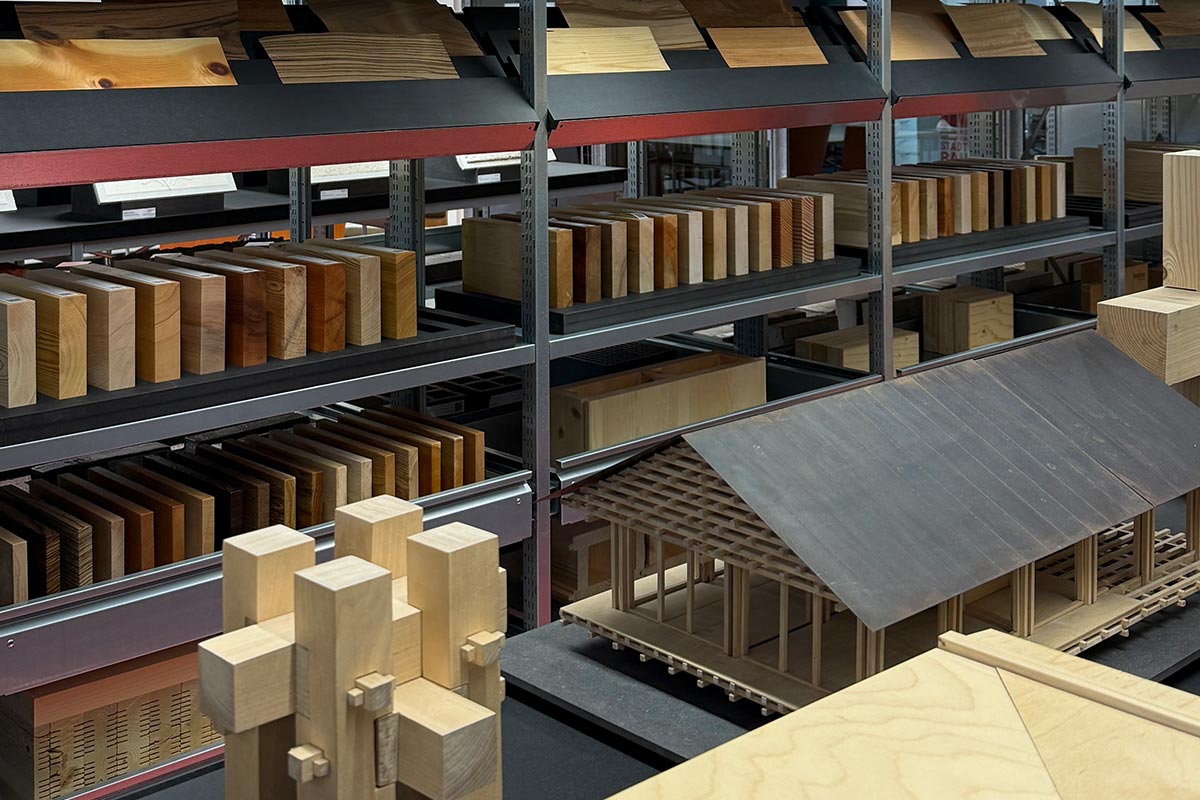
The exchange supports municipal administrators and nonprofit leaders from six partner cities in understanding how to reduce carbon emissions across the building lifecycle, while also sparking innovative ideas in social housing. Priority topics include just transitions in the built environment, decarbonisation of building materials, and bioregional planning. Cities are uniquely situated to tackle these issues, and their relevance has become increasingly important as global and national-level climate efforts falter or retreat.
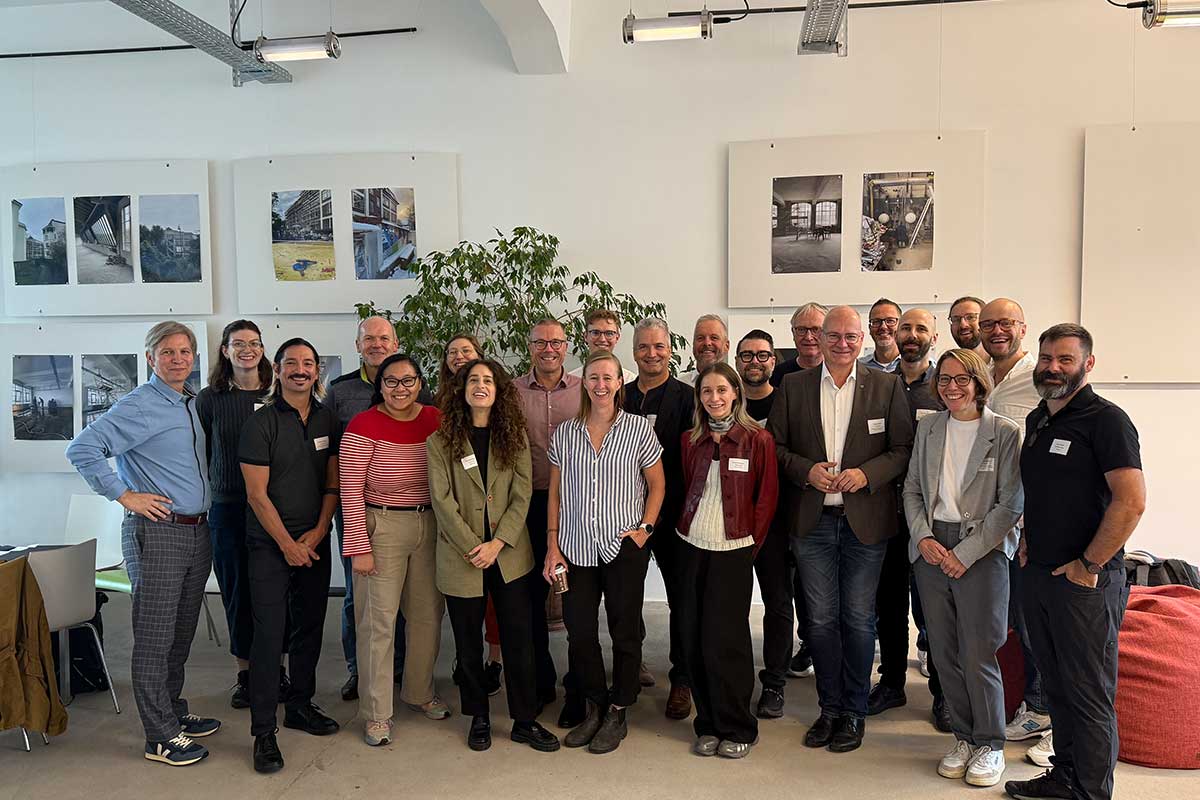
At the heart of the project are two field trips, where participants have the opportunity to share best practices and innovative approaches from their cities.
The German field trip took place in September 2025. The full report can be found here. The US trip is scheduled for May 2026.
The aim is to promote transatlantic, regional, and intergenerational knowledge sharing, thereby fostering more sustainable and equitable urban development by addressing ecological and social issues together.
414films%20(3).jpeg)
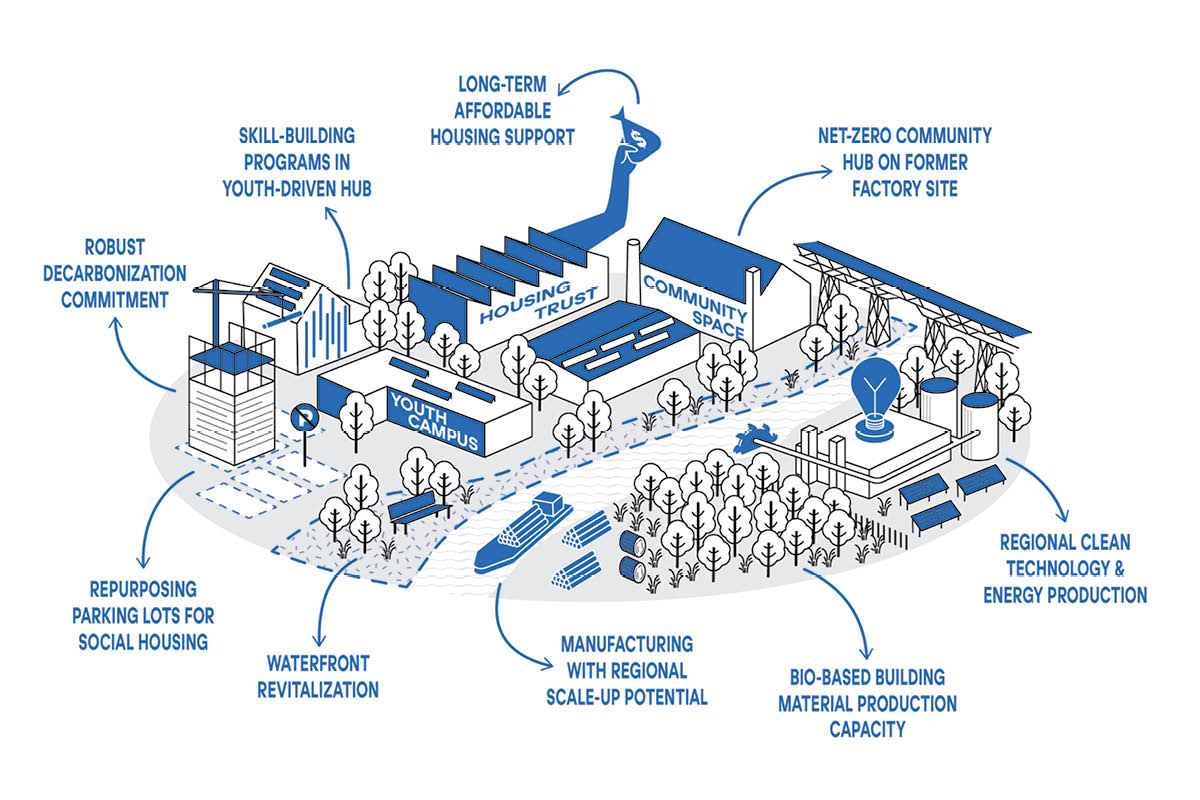
Poughkeepsie SWOT analyses from the Urban Catalyst workshop © Bauhaus Earth
Partner Cities
All of the partner cities in Germany and the US – have experienced the effects of structural change and deindustrialisation to varying degrees and in different ways. In this context, our exchange examines diverse strategies for decarbonisation and the co-benefits that these bring for cities, such as addressing housing shortages and spurring regional development and job growth. As part of the exchange, representatives from the cities have shared experiences, strategies, and best practices with the goal of understanding opportunities and benefits for the city.
A light-touch analysis of the potential drivers and benefits of decarbonisation in each city, conducted with the local partners as well as with Urban Catalyst, can be found here.
The three German cities –– Wuppertal, Bottrop, and Dortmund– are located in and around the Ruhr Valley in North Rhine-Westphalia. They have all been affected by structural change with the transition of the region away from mining and industrial production. This has left interrelated challenges of unemployment, economic redefinition, and unused infrastructure such as buildings and railways. At the same time, each of the three cities has in some way proven itself a frontrunner. Climate is high on their agendas, with net-zero targets set for 2035 (Dortmund, Wuppertal) and 2045 (Bottrop). All three cities also host universities with programmes focused on climate and sustainability.
All three of the U.S. partner cities – Poughkeepsie, Burlington, and New Haven –are located in the Northeastern United States and similarly share, to varying degrees, a history of post-industrial transition. Both New Haven, CT and Poughkeepsie, NY were impacted by U.S. federal “urban renewal” programmes that left large parts of their city centres demolished and resulted in significant social and spatial inequalities. Each city has uniquely responded to these challenges and demonstrated emerging leadership.
Burlington has set ambitious climate targets (net-zero by 2030) and a comprehensive sustainability agenda, while New Haven has established a community-led Climate and Sustainability Framework aiming for 55% emissions reduction by 2030. Poughkeepsie is developing a climate strategy and is strongly focused on long-term city resilience and positioning the city as a resource-rich, youth-driven hub. All three cities are also home to strong academic institutions providing an important knowledge base to support local transformation efforts.
In addition to city representatives, the exchange is enriched by the expertise of local nonprofit and academic institutions that work closely with the city government on the topic of building and decarbonisation. This includes Model of Architecture Serving Society (MASS), Scenic Hudson, Circular Valley Foundation, Wuppertal Institute, and Yale University.
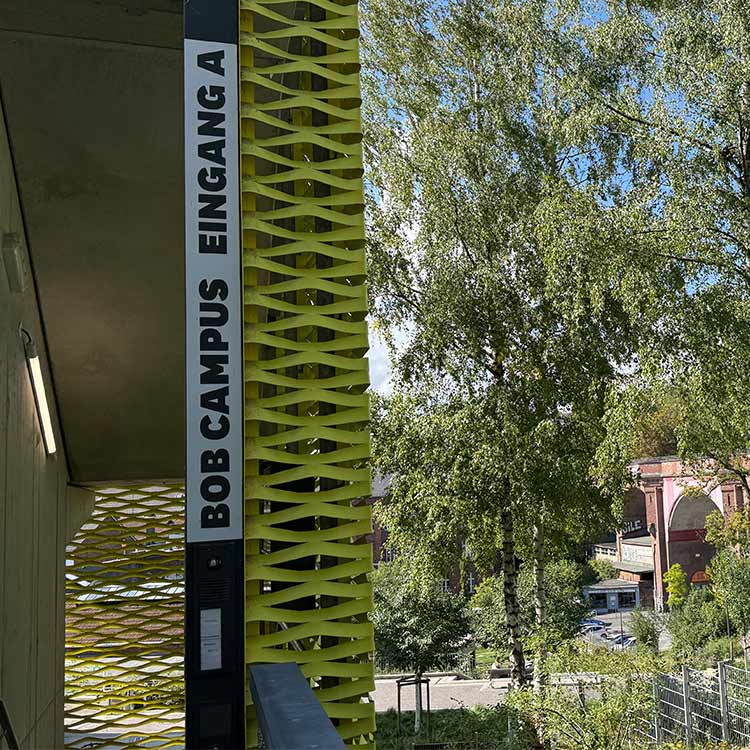
© Cara Emberger, Bauhaus Earth
© Cara Emberger, Bauhaus Earth



No items found.
No items found.
No items found.
Team

Francesca Brecha
Researcher
No items found.
Bauhaus Earth Alumni
Lily Teitelbaum
Project Lead
Funders & Donors
Partners




No items found.
News
Upcoming Events
Thank you! Your submission has been received!
Oops! Something went wrong while submitting the form.
Curious about our past events further ahead? Check out all our past events below.
No events in the upcoming weeks
Past Events
Tue
09
Dec
16:00
Online Transatlantic Workshop on Accelerating Building Decarbonisation
More detailsOnline
An online workshop for students, young professionals, city officials from 6 partner cities
Workshops
Wed
17
Sep
16:00
Regenerative Futures Symposium
More detailsAtelier Gardens/Haus 12, Oberlandstr. 26-35, Berlin, Germany
International Symposium organised by Bauhaus Earth and Built by Nature Germany
Conferences

Resources
Outputs of the project so far can be downloaded here.