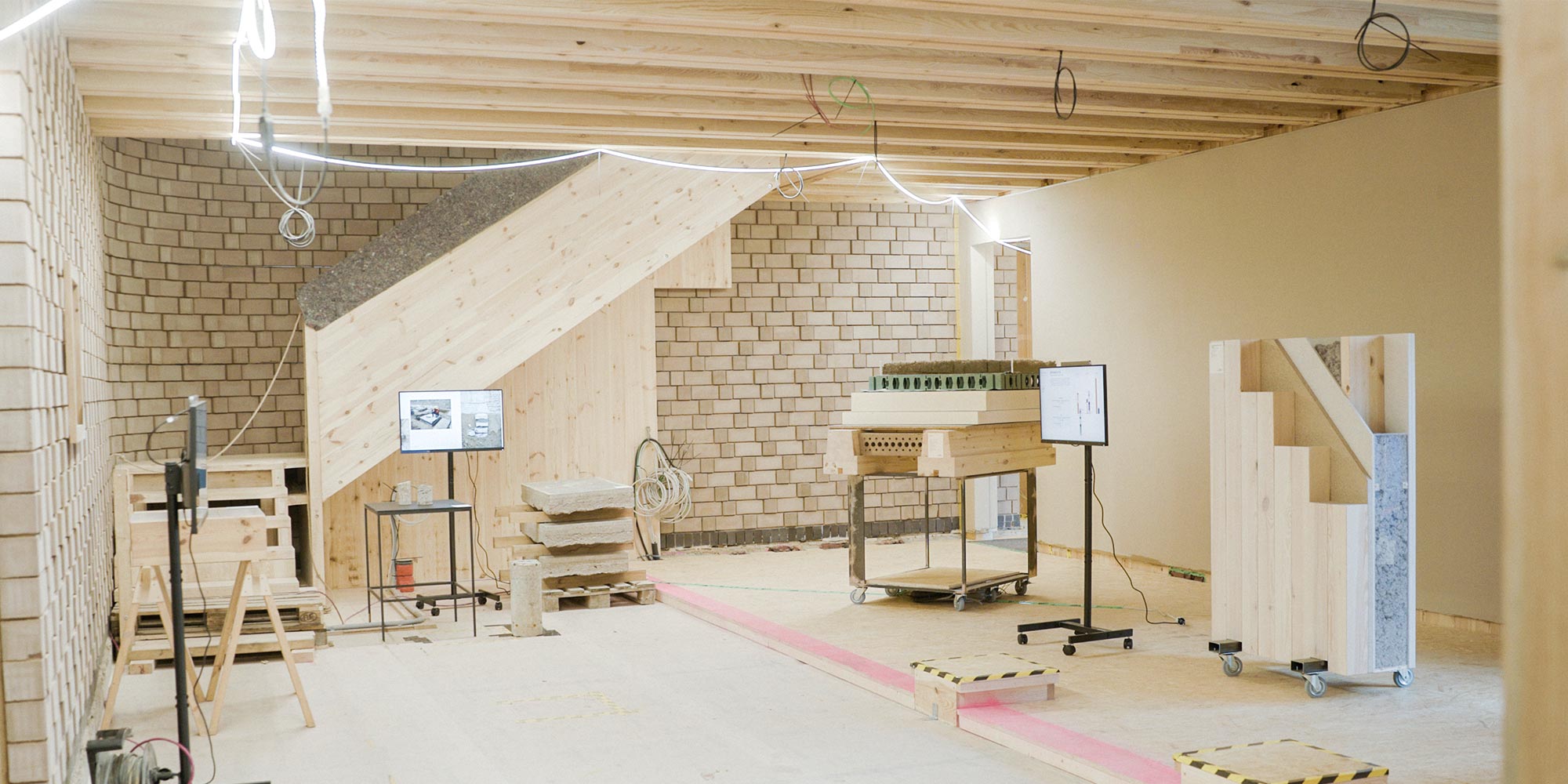
Exhibition Opening "FORSCHEN, FORMEN,TRANSFORMIEREN". Copyrights image © Fabian Wolf, HLBC
All articles
Exhibition "FORSCHEN, FORMEN, TRANSFORMIEREN"
Date
13/5/2026
Read time
0
minutes
From 12 to 16 May 2026, the Holz-Lehmbau Campus Berlin (HLCB) opened its doors for "FORMEN, FORSCHEN, TRANSFORMIEREN" ( "Forming, Researching, Transforming"). Presented by Bauhaus Earth, B&O Bau und Gebäudetechnik and sauerbruch hutton, the exhibition offered public insights into our Holz-Lehm-Hybrid research project: a living lab for regenerative building practice that investigates how circular, low-carbon construction with timber, earth and reused materials can be translated into built reality.
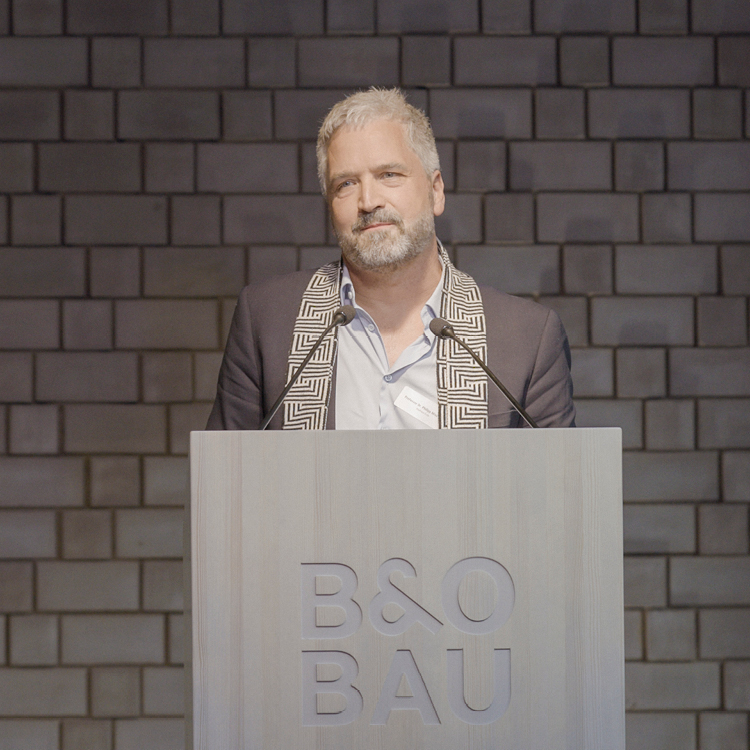
Opening Speech by Philipp Misselwitz © Fabian Wolf
-web-(c)-414films.jpg)
© Fabian Wolf
No items found.

The opening drew significant attention, welcoming representatives from politics, planning, research and construction, including Berlin's Senator for Urban Development, Building and Housing. The fully booked public tours in the following days reflected the relevance of regenerative construction methods and underscored a central message of the project: bio-based and circular construction methods are no longer abstract future scenarios, but technically tangible and increasingly relevant pathways for transforming the building sector.
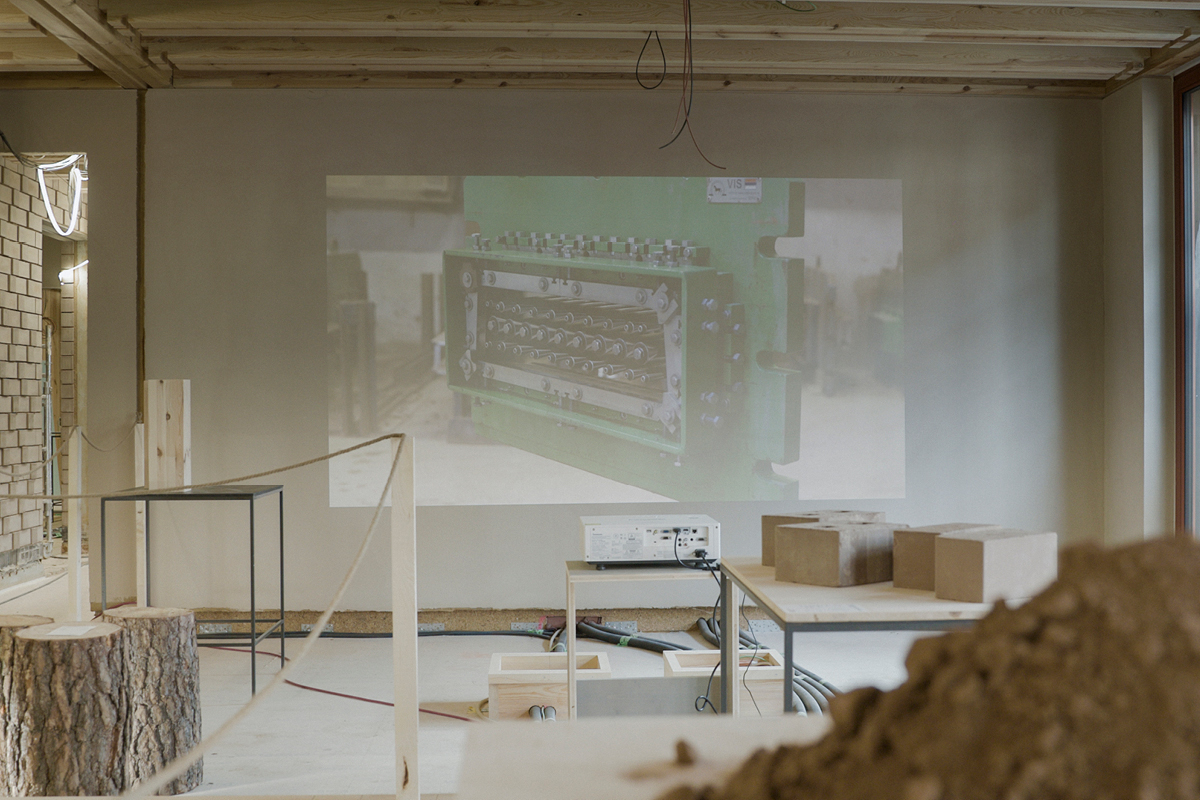
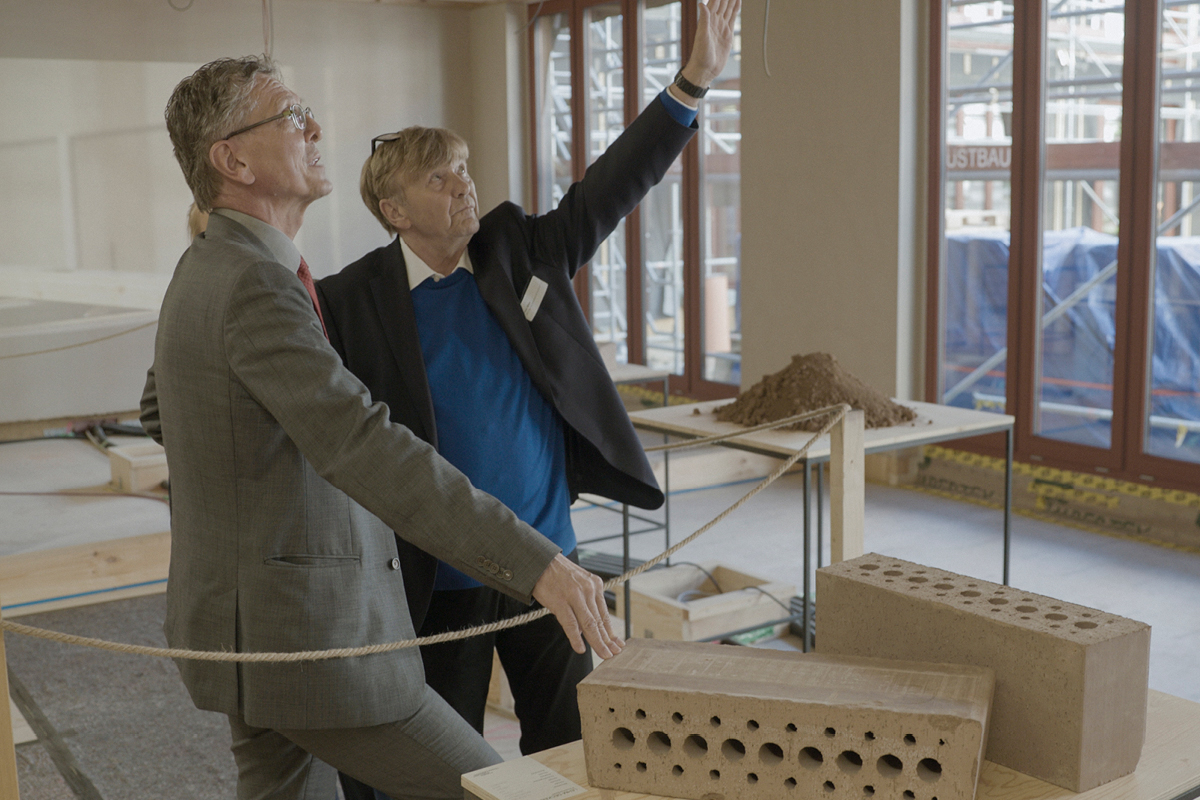
At the core of the Holz-Lehm-Hybrid project lies a research approach that connects scientific assessment directly with design, prototyping and construction practice. Under the research lead of Bauhaus Earth and in close collaboration with B&O Bau und Gebäudetechnik as developer, client, contractor, and active research partner, as well as sauerbruch hutton as the architects, the campus serves as an applied testing ground for regenerative building components under real-world planning, regulatory and logistical conditions.The exhibition made this process tangible through raw materials, prototypes, full-scale demonstrators, digital presentations and short films documenting development, production and assembly processes. Visitors experienced regional and regenerativee materials such as pine wood, earth, straw and paludi, alongside reused concrete elements. They could trace how these materials are integrated into construction systems designed for reduced emissions, material circularity and future disassembly.
A central outcome of Bauhaus Earth's research is the iterative development and evaluation of five innovative building components that drastically cut material-bound CO₂e emissions by roughly 77 percent compared to conventional construction equivalents.
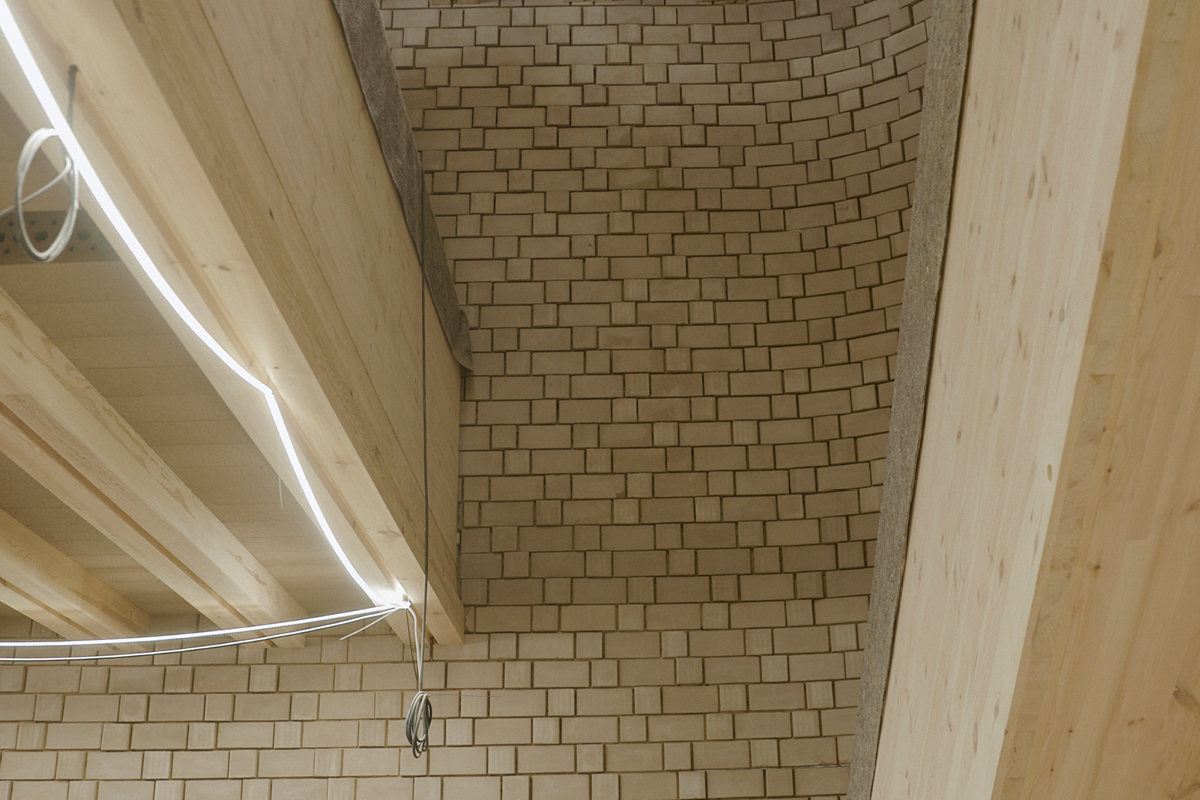
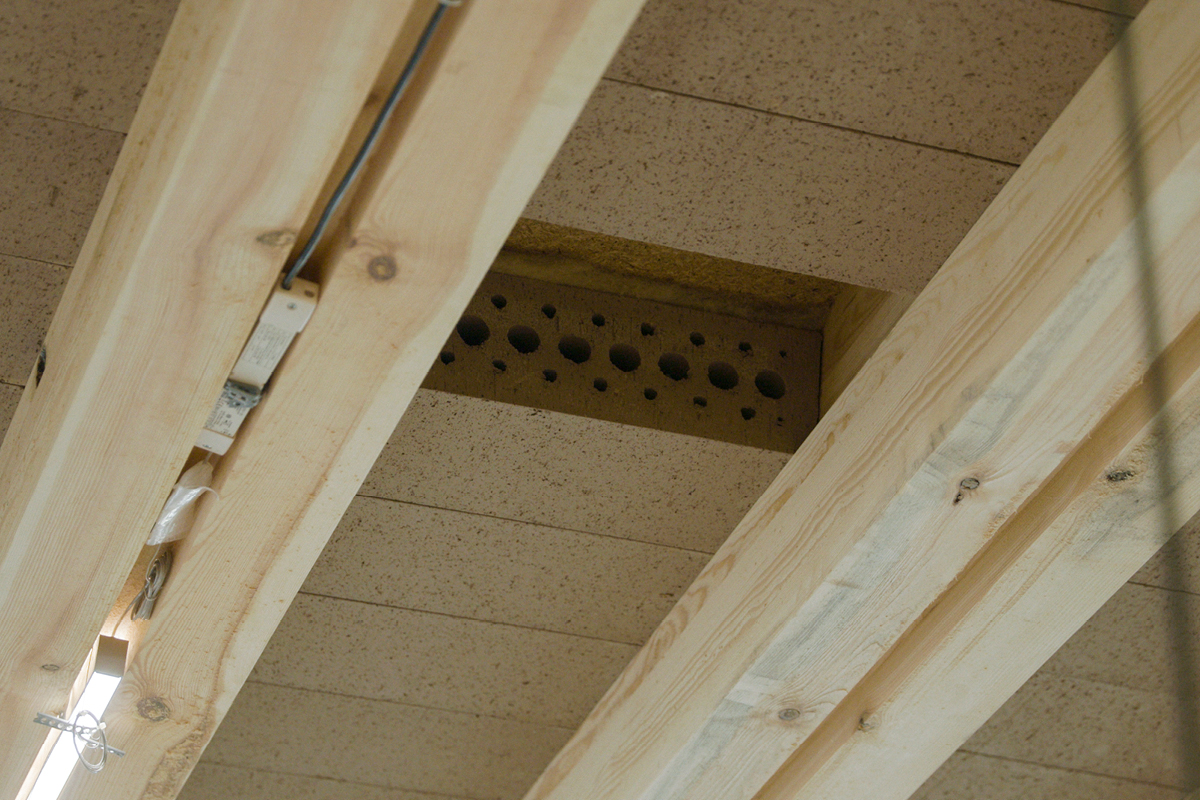
One of the project’s key innovations is the timber-earth hybrid ceiling. The system combines load-bearing timber elements made from regional pine with prefabricated earthblocks, which contribute functional mass for moisture regulation, thermal inertia and improved acoustics. In collaboration with B&O Bau und Gebäudetechnik, Ziegelei August Lücking and Bauhaus Earth, a dedicated extrusion mouthpiece was developed to enable the industrial production of these earth blocks within the existing capacities of a conventional brick factory.
By bringing together ecological evaluation, material research, prototyping and full-scale implementation, the Holz-Lehm-Hybrid project demonstrates how regenerative construction can be advanced beyond individual experiments toward transferable building systems. To explore the scientific methodology, the component development, and dive deeper into Bauhaus Earth's research for the Holz-Lehmbau Campus Berlin, visit our project page.
The research project is funded by DBU, Bundesstiftung Umwelt
Press Gallery
Partners