Ⓒ Adrià Goula for Bauhaus Earth
All articles
New Report: Bio-Based Construction and the Role of Logistics
Date
27/10/2025
Read time
0
minutes
Bauhaus Earth and Kuehne Climate Center call for stronger supply chains to unlock the full potential of bio-based construction. Their joint research highlights the critical role of material flows in climate-positive building worldwide.
414films%20(3).jpeg)
-web-(c)-414films.jpg)
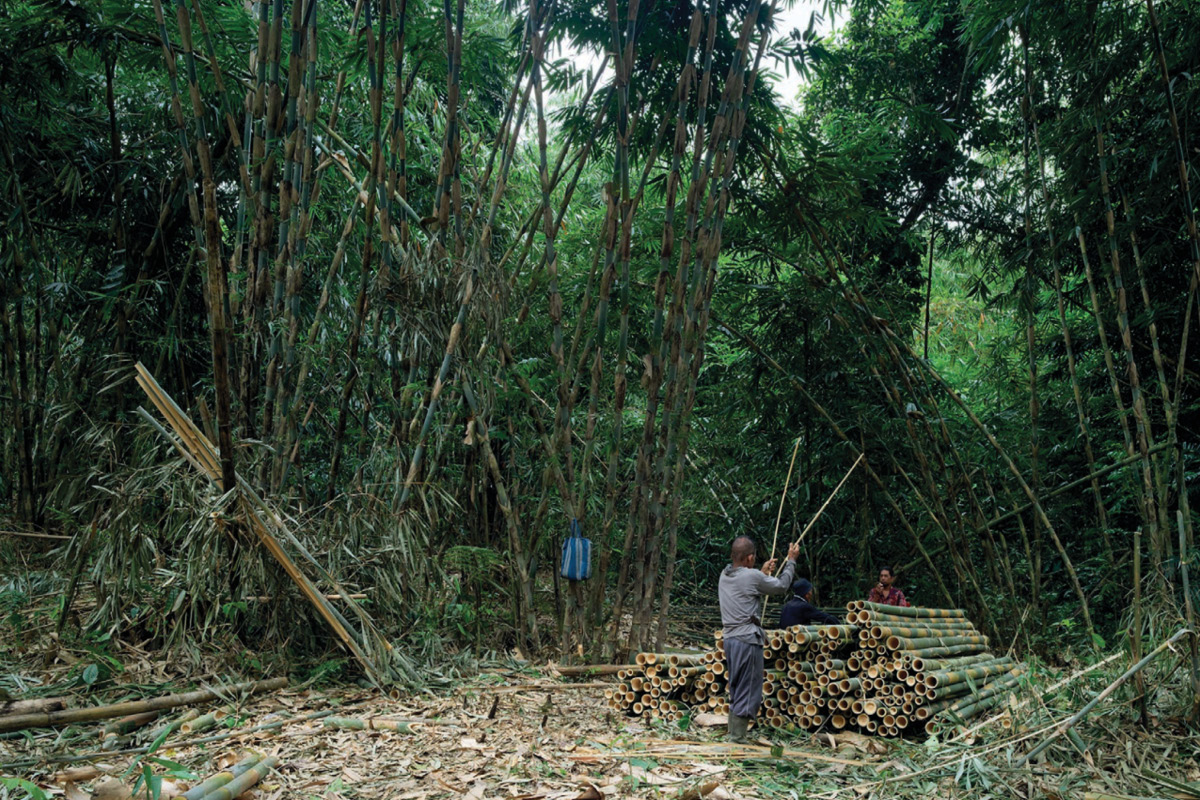
1. Bamboo Processing, Bali © Bas Princen / 2. Mass is More, Barcelona © Adriá Goula / 3. B&O Bau timber frame production, Frankfurt/Oder © Bas Princen for Bauhaus Earth



No items found.

The study, Bio-based construction and the role of logistics – Foundations and case studies from Germany, Kenya, and Indonesia, examines supply chain structures and potentials across three countries and identifies three key insights:
- Supply chains for bio-based construction remain underdeveloped.
Across Germany, Kenya, and Indonesia, there are significant gaps in processing capacity, logistics coordination, and material standardisation. - Inefficient logistics increase costs — particularly in emerging economies.
In Kenya, logistics account for nearly half of the total cost of timber products, limiting affordability and market access. - Bio-based supply chains remain climate-positive, even across long distances.
Transport emissions for timber are significantly lower than often assumed — even when shipped or trucked over long distances, timber retains a better carbon balance than locally produced concrete.
“Research and innovation in the field of bio-based materials are thriving. If companies can rely on stable market conditions, they will invest in cost-efficient production and make bio-based materials available at scale” -Philipp Misselwitz, Bauhaus Earth
The findings underline the importance of efficient integrated supply chains and well-designed logistics to reduce costs, strengthen markets, and accelerate the global shift toward a climate-positive construction sector.
The full report "Bio-based construction and the role of logistics" is available for download here.
Press Gallery
Partners