Cover photo © GOAarchitecture
All articles
Timber Adoption at Scale: New Report by FAO and Bauhaus Earth
Date
25/6/2026
Read time
0
minutes
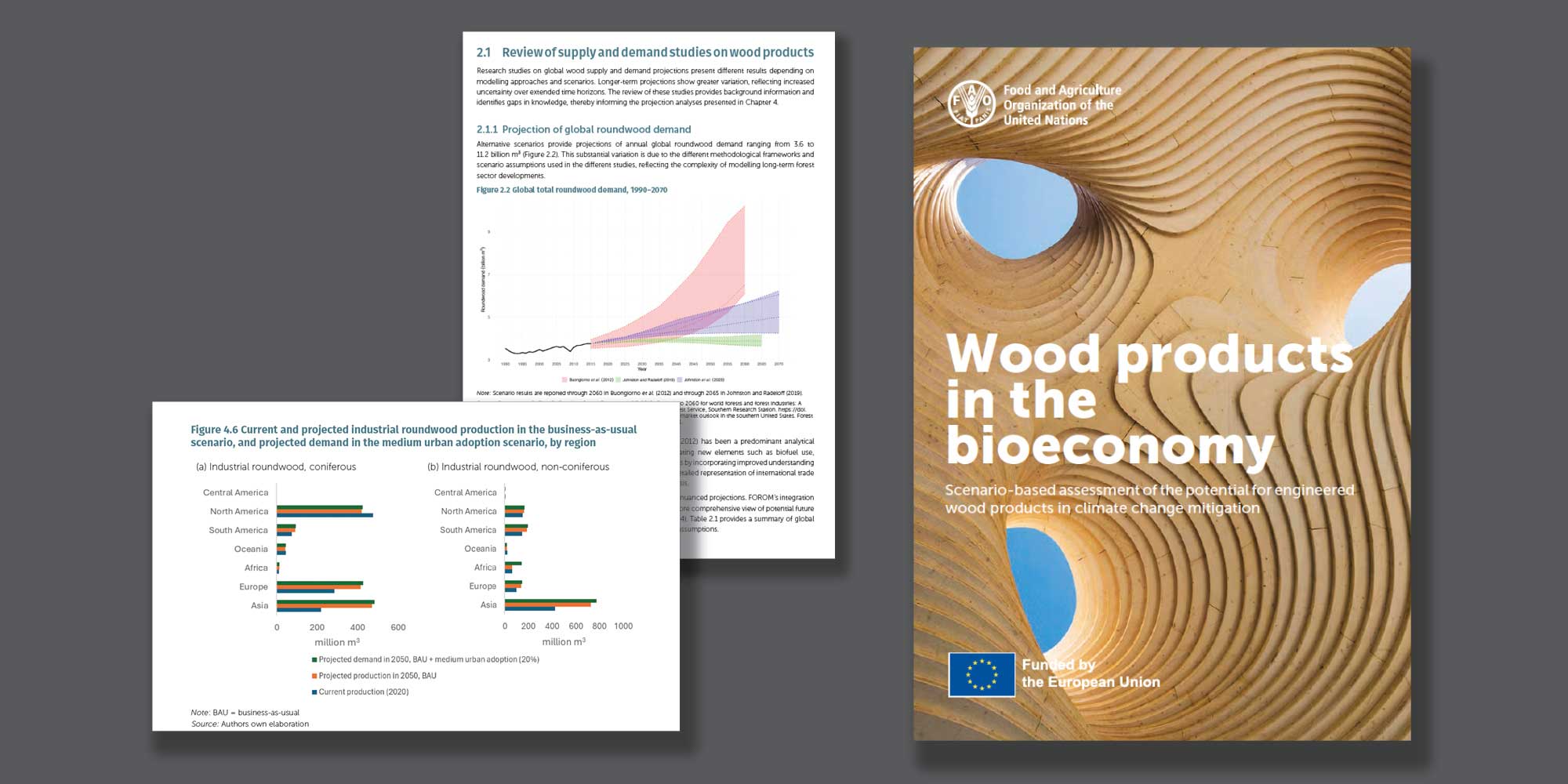
Launched at London Climate Action Week 2026, the new flagship report „Wood products in the bioeconomy. Scenario-based assessment of the potential for engineered wood products in climate change mitigation“ by the United Nations' Food and Agriculture Organization (FAO) and Bauhaus Earth estimates the global climate change mitigation potential for engineered wood products in construction at different adoption levels.
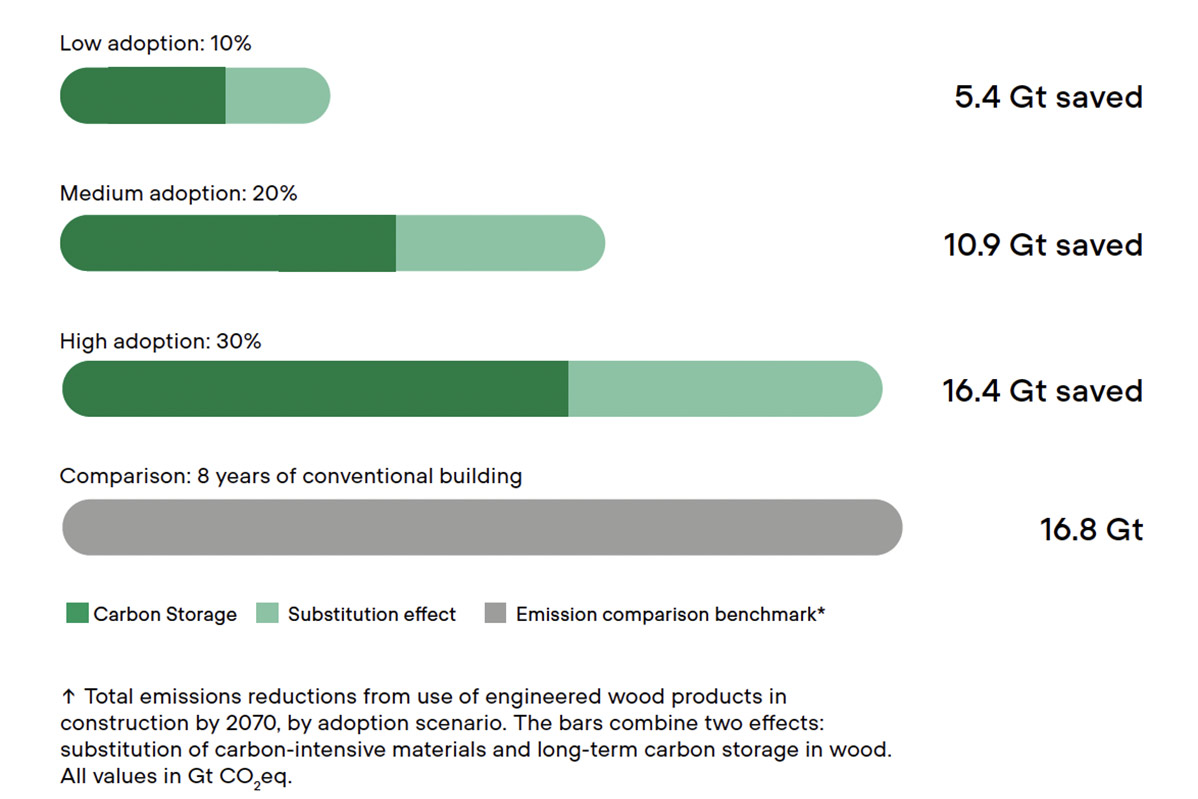
The climate stakes are significant: Scaling up engineered wood use in the built environment could deliver substantial emissions reductions. Even moderate uptake of could meaningfully bend the curve on global emissions.
414films%20(3).jpeg)
-web-(c)-414films.jpg)
© Bauhaus Earth
No items found.

Modeling a Dual Climate Effect
By utilising the Forest Resource Outlook Model (FOROM), our researchers projected how increasing the use of mass timber in urban construction could mitigate climate change through a powerful dual effect: direct, long-term carbon storage within the material itself, and the displacement of high-emission alternatives like steel and concrete.
Under a conservative 20% adoption scenario for new residential buildings, the global system could save up to 10.9 Gt CO2eq until 2070. Remarkably, 59% of this environmental benefit stems from carbon safely locked away in the wood structures, while 41% comes from avoided manufacturing emissions.
To achieve timber adoption at scale and prevent supply-demand imbalances, the report outlines a clear roadmap: prioritising strict material circularity, maintaining open international trade, and seamlessly integrating wood-based architecture into national decarbonisation frameworks.
"Replacing carbon-intensive construction materials with engineered wood products could transform the building sector into a major player for global climate mitigation. But to unlock this potential, policymakers must act now — updating building codes, creating market incentives, and enforcing regulations against deforestation." Philipp Misselwitz, CEO Bauhaus Earth
Mapping Global Supply and Demand
The research evaluates multiple socioeconomic scenarios through 2070, indicating that urban demand for EWPs could grow by 50 to 250 million m³ by mid-century. While fast-growing urban centres across Asia and Africa are set to drive this massive future demand, Europe and South America are projected to emerge as essential supply hubs.
To prevent supply-demand imbalances, the report outlines a clear roadmap: prioritising strict material circularity, maintaining open international trade, and seamlessly integrating wood-based architecture into national decarbonisation frameworks.
Funded by the European Union
Authors: Reck, B.K.; Johnston, C.; Foong, A.; Gupta, A.; Karpov, A.; Holsten, A.; Misselwitz, P.; Keenan, R.J.; Formenton Cardoso, N.; Walter, S.; Bull, L.; Steel, E.A.;
Download the full eport
FAO and Bauhaus Earth: "Wood products in the bioeconomy"
Press Gallery
Partners