141films.avif)
© 414 Films
Background
Berlin and Brandenburg are two of Germany’s federal states that share a historically and geographically intricate relationship. While Berlin is a densely populated, rapidly growing European metropolis, Brandenburg is a sparsely populated region dominated by agriculture and forestry. The legacy of 20th-century border demarcations is still evident in spatial inequalities, but since the fall of the Berlin Wall in 1989, there has been a concerted effort to promote spatial integration. Today, the two regions are often presented as a unified metropolitan area, although challenges such as urban–rural disparities and infrastructure needs remain.
Berlin must decide how it wants to grow
Berlin’s rapid urbanisation is placing immense pressure on the housing market, with the demand for affordable living spaces continually rising. The political goal of building 20,000 new residential units each year has led to expansion even into the surrounding hinterland. However, this often comes at the expense of climate protection, as it relies heavily on concrete and new construction. Although timber construction is gaining traction, it primarily addresses single-family homes, which are not sufficient to meet the city’s housing needs. This raises doubts about the effectiveness of the current construction agenda. It is therefore crucial to develop strategies that tap into the potential of the existing building stock, integrate circular building practices, explore solutions for urban densification and utilise the urban mining approach to reimagine resource use.
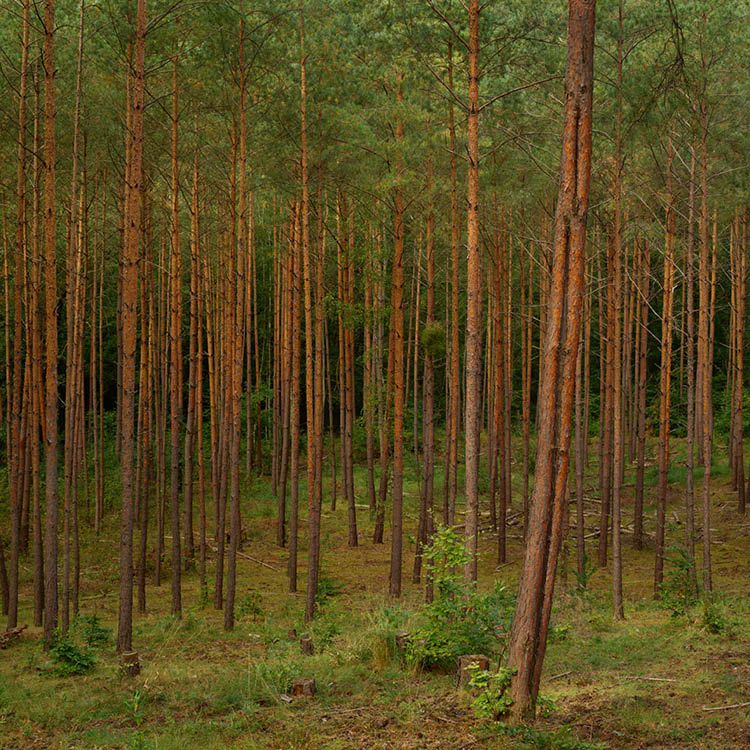
Monocultural pine forest in Brandenburg © Bas Princen
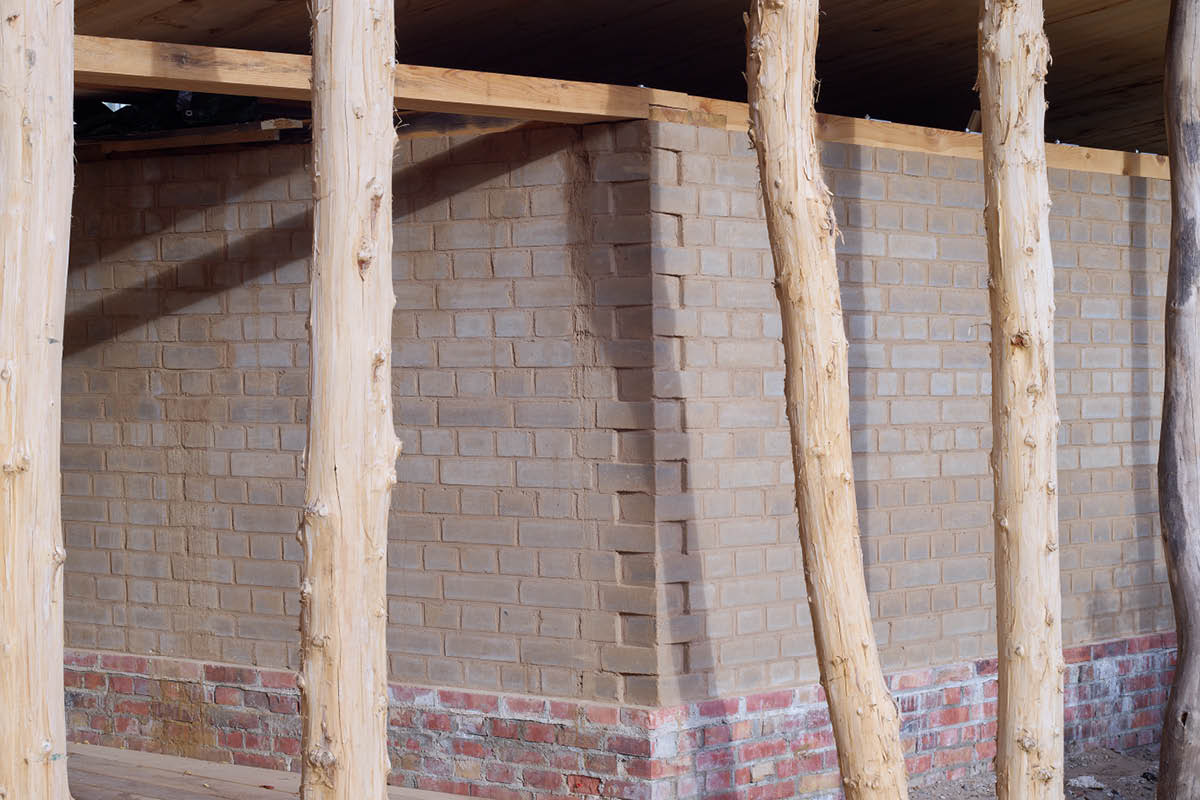
Demonstrator Building ProtoPotsdam in Potsdam, Brandenburg © Bas Princen
Between pine and privatization
Following the fall of the Berlin Wall, the city of Berlin sold much of its municipal land, while the state of Brandenburg privatised large portions of its forests. Today, approximately 100,000 private owners control approximately 60% of Brandenburg’s forests, creating a fragmented landscape that reflects an individualistic approach to land ownership. This fragmentation underscores the lack of integration between the forestry and construction sectors, making it difficult to create a cohesive strategy for sustainable development.
However, Brandenburg’s pine-dominated forests—comprising 70% of the region’s forest cover—present a crucial opportunity. If managed properly, they could play a pivotal role in the region’s shift towards sustainable construction, helping to meet housing demands in a more regenerative and environmentally responsible manner. Current initiatives, such as converting forests into climate-resilient mixed forests, increasing the cultivation of industrial hemp and rewetting peatlands, are politically supported and demonstrate the region’s commitment to climate protection and forward-looking construction strategies.
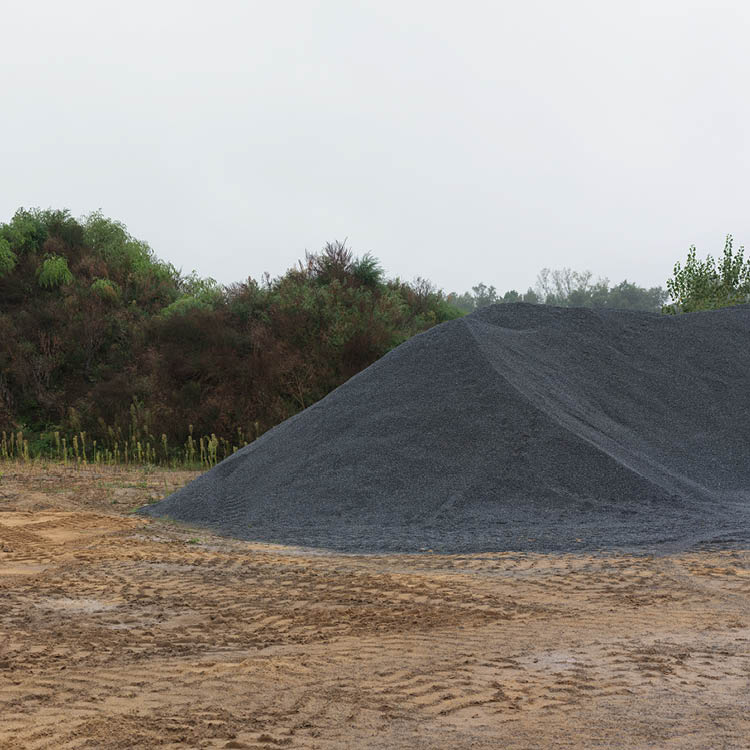
© Bas Princen
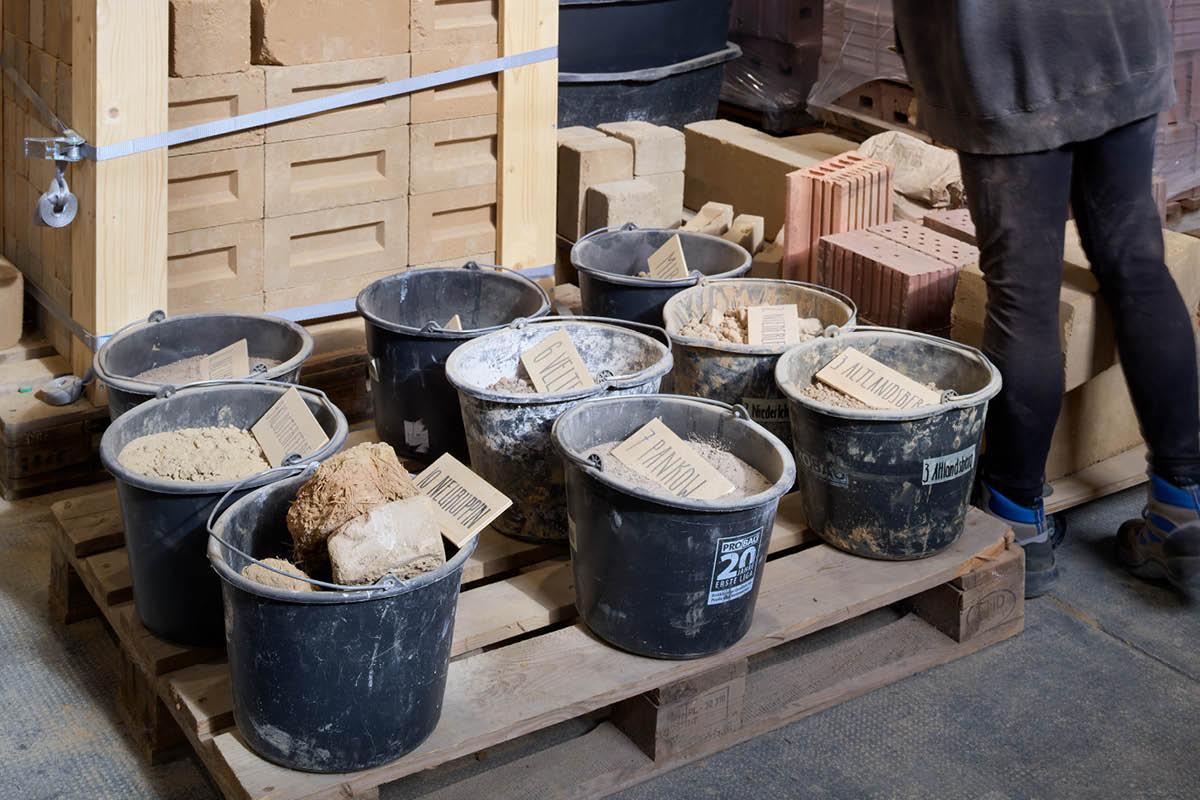
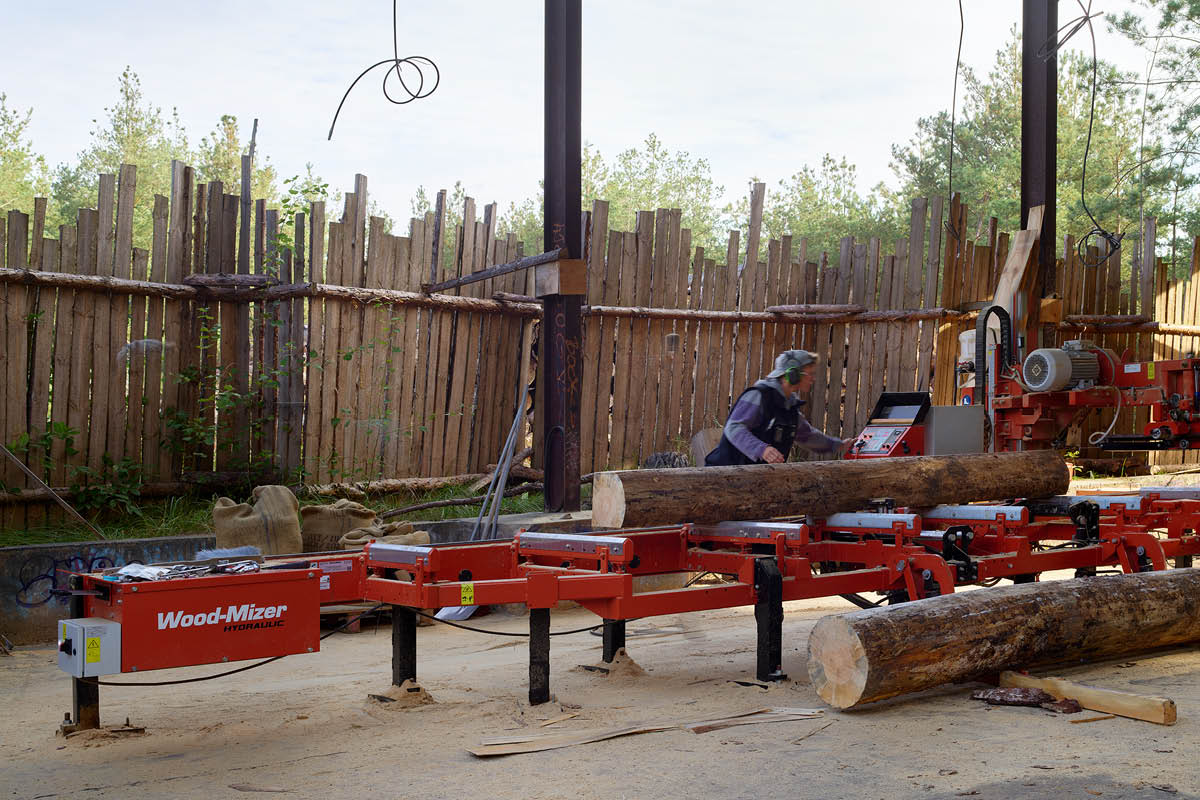
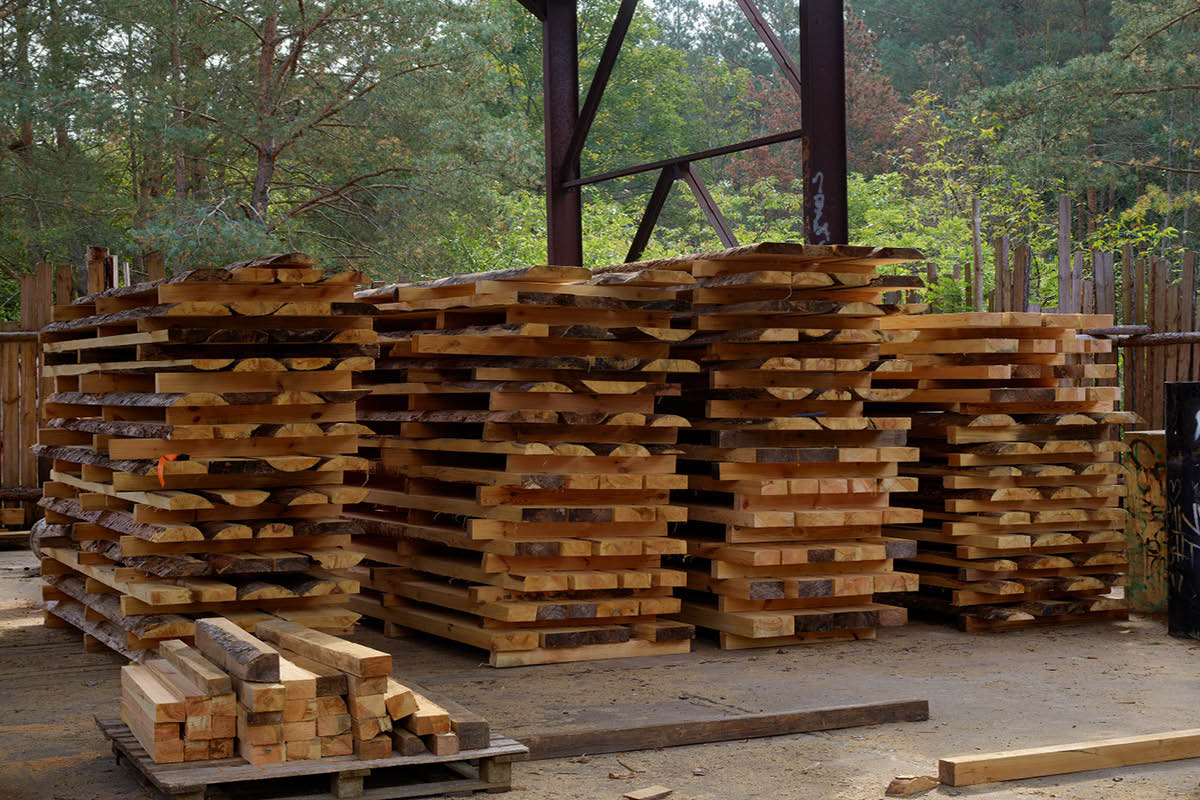
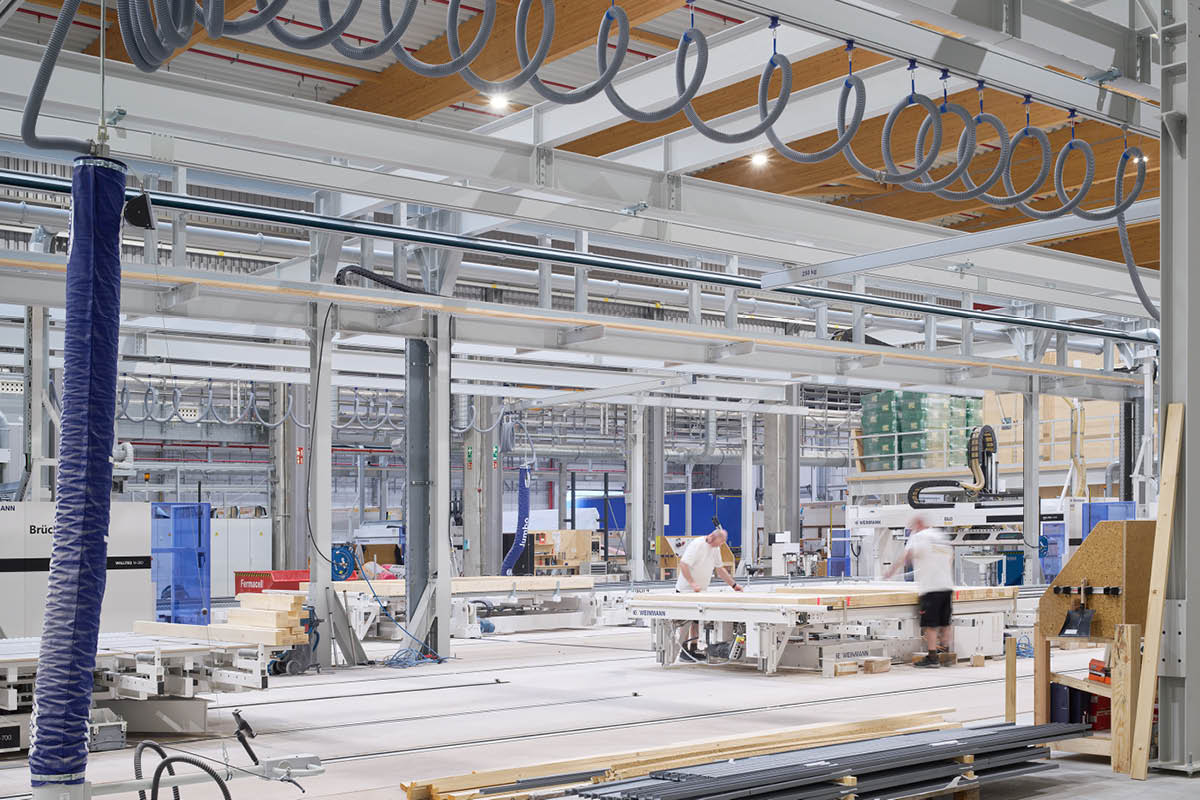
Research of value chains for wood and earth , Berlin-Brandenburg, Germany © Bas Princen
No items found.
Windows of Opportunity
The Berlin-Brandenburg region holds great potential to harness its natural resources and innovative capacity to create a more integrated and circular material economy within the built environment. Such an approach could ease housing pressures in Berlin while addressing the structural fragmentation of rural Brandenburg, establishing the region as a model for regenerative urban–rural connectivity. Building on these opportunities, ReBuilt has identified key levers to strengthen the links between forestry, agriculture and construction. These insights are captured in a roadmap offering local changemakers actionable recommendations for short-, medium- and long-term measures to drive the transition towards becoming a Regenerative Resource Region. Through public exhibitions, workshops, podcasts, a demonstrator and teaching activities, ReBuilt promoted regional value chains and the use of regenerative materials, helping to accelerate the transformation of the building sector.
Key opportunities include:
- Strategic Ecosystem Restoration:
Restoring forests, peatlands, and farmlands presents a major opportunity to combine climate resilience with regional value creation. By linking ecological recovery with material provision, Brandenburg can become a model for regenerative land management.
- Regional Capacity for Bio-based Material Innovation:
There is strong potential for industrial renewal in expanding research and production capacities for regenerative materials such as timber, straw and hemp. Strengthening local value chains and processing skills can establish Brandenburg as a hotspot for bio-based construction.
- Circular Standards in Public Construction:
Public building programmes present a key opportunity to drive the transition towards a circular economy. By setting clear CO₂ criteria and reuse targets, municipalities can promote low-impact construction on a large scale and demonstrate climate leadership in practice.
- Integrated Knowledge and Coordination Platforms:
Creating shared platforms for data, learning and collaboration is a crucial way of aligning regional stakeholders. Connecting research, policy and implementation strengthens the collective capacity for regenerative building across the Berlin-Brandenburg region.
The ProtoPotsdam Pavillion is co-financed by the Federal Ministry for the Environment, Climate Action, Nature Conservation and Nuclear Safety.
Resources
Team
No items found.
No items found.
Bauhaus Earth Alumni
Albrecht Dobelstein
Project Associate
Kilian Schneider
Researcher
Funders & Donors
Partners